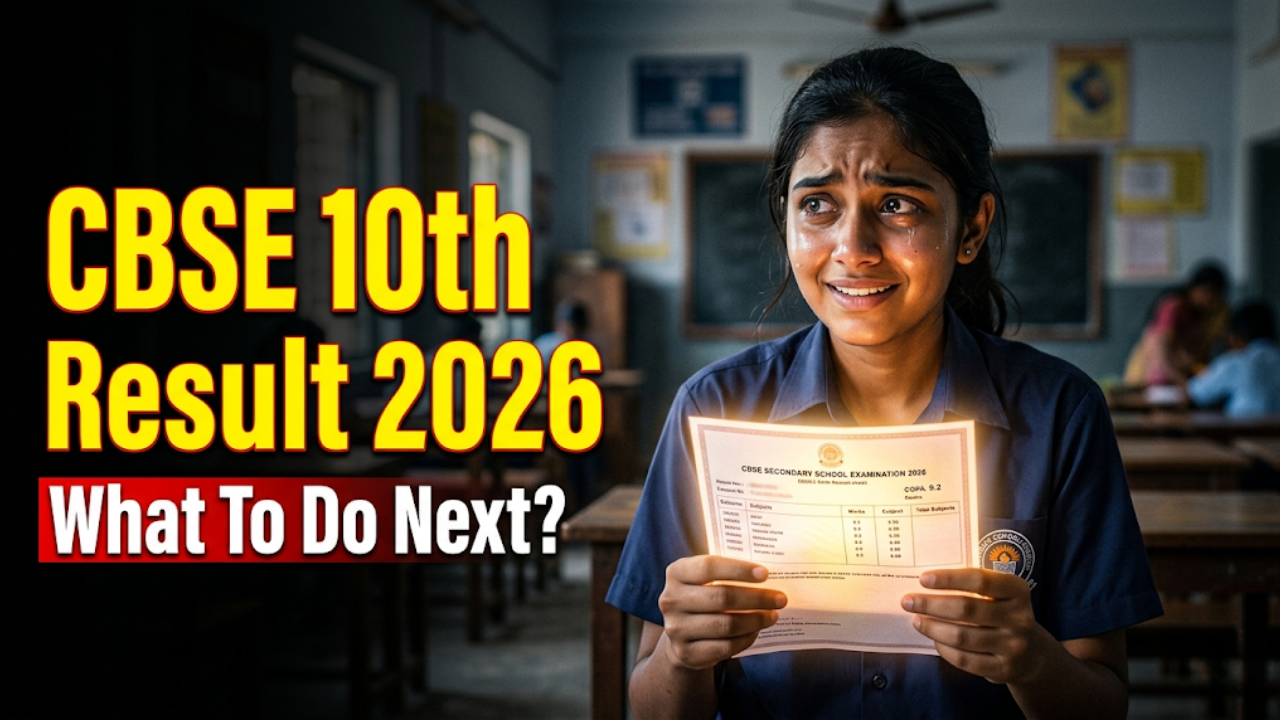
The CBSE Class 10 board results are one of the most anticipated and emotionally charged moments in a student’s academic life. Whether you scored above 95%, comfortably passed, or are looking at re-evaluation options, one truth applies to everyone equally: what you do next matters far more than the number on your marksheet.
This guide is written for students, parents, and guardians who want to turn the post-result phase into a launchpad — not a source of anxiety.
Understanding the CBSE Class 10 Result: The Basics
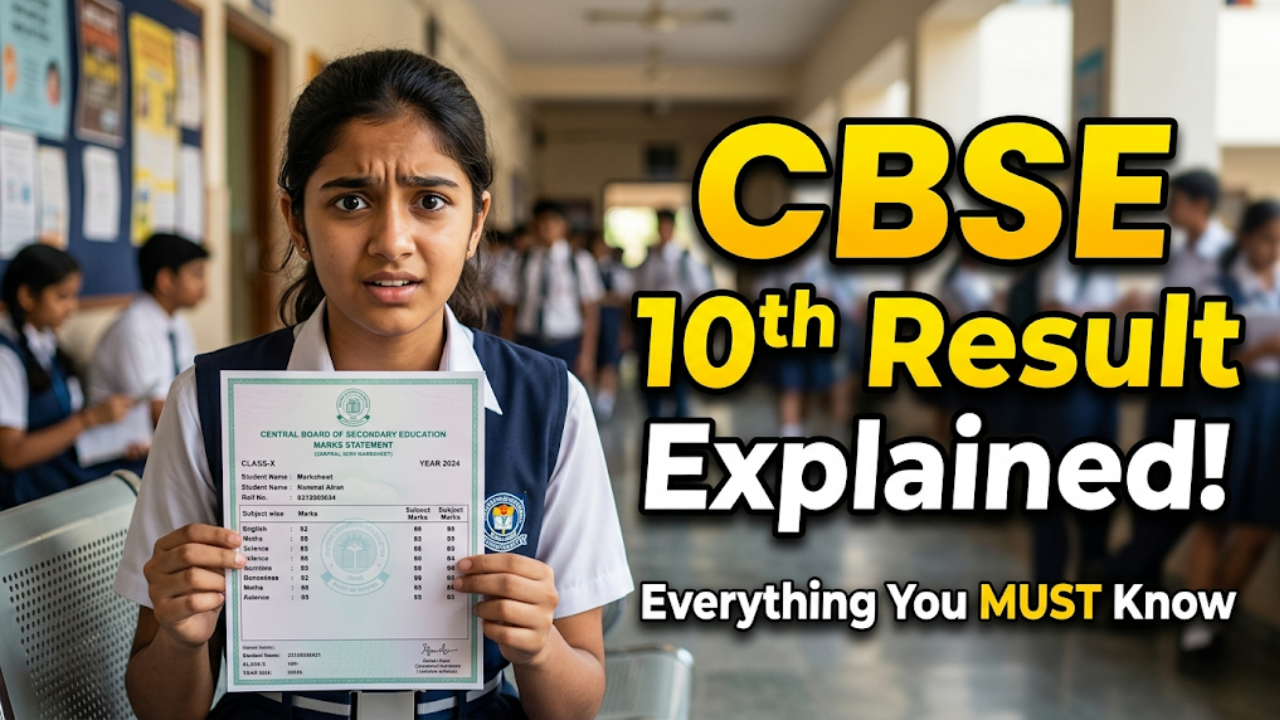
When and Where to Check
The CBSE Class 10 results for the 2025–26 academic session are expected to be declared in the second week of May 2026, based on past year trends. Students can access their results through the following official platforms:
- cbse.gov.in
- cbseresults.nic.in
- results.cbse.nic.in
- DigiLocker app
- UMANG app
- Via SMS using your roll number
To log in, you will need your roll number, school number, centre number, and admit card ID.
What Your Marksheet Contains
Your CBSE Class 10 marksheet will include your name, father’s and mother’s name, roll number, school name, subject-wise marks (theory and practical separately), total marks, grade points, and your pass or fail status per subject.
How to Calculate Your Percentage
CBSE considers your best five main subjects for percentage calculation. Add the marks scored in those subjects and divide by 500, then multiply by 100.
Example: If you scored 421 out of 500, your percentage = (421 ÷ 500) × 100 = 84.2%
If you registered for a sixth subject, CBSE automatically picks your best five for the final calculation.
Passing Criteria
To pass, you must score a minimum of 33% in each subject — both in theory and practical (where applicable) separately. If you fall short by one or two marks, CBSE may award grace marks at its discretion.
In 2024, the overall CBSE Class 10 pass percentage stood at 93.60%, with girls outperforming boys (94.25% vs. 92.27%).
What to Do If You Are Not Happy With Your Marks
Before making any decision about your future stream or course, it is important to know that CBSE offers a structured post-result process that gives every student a fair chance.
Step 1: Obtain a Photocopy of Your Answer Sheet
You can apply to receive a photocopy of your evaluated answer book for approximately ₹700 per sheet. This lets you review exactly how your answers were marked before deciding on further action.
Step 2: Apply for Verification of Marks
Verification (approximately ₹500 per subject) involves checking whether all answers were marked and totals were added correctly. This does not involve re-reading your answers.
Step 3: Apply for Re-evaluation
If the photocopy reveals concerns about how specific answers were evaluated, you can apply for re-evaluation at approximately ₹100 per question. If your marks increase upon re-evaluation, the fee is refunded.
Compartment Exams
If you have failed in one or two subjects, you are eligible to appear for the CBSE Compartment Exam (held in June/July). You do not need to repeat the entire year. If you fail in more than two subjects, you will need to repeat Class 10.
Improvement Exams
Students who have passed but wish to improve their marks in up to five subjects can appear for improvement exams. Many students use this option to boost their scores before applying to competitive colleges.
The Decision That Defines the Decade: Choosing Your Stream
This is the section that matters most. Once your result is declared, the single most important decision awaiting you is: which stream will you choose for Class 11 and 12?
This choice shapes the subjects you study for the next two years, the entrance exams you are eligible for, the colleges you can apply to, and ultimately, the career path you walk down.
CBSE offers three major academic streams, plus an increasingly popular vocational route.

Stream 1: Science
Who Should Choose Science?
The Science stream is ideal for students who enjoy logic, experimentation, and problem-solving. If you find yourself naturally curious about how things work — from equations to ecosystems — Science is likely your natural home.
Core Subjects: Physics, Chemistry, Biology, Mathematics, Computer Science
You can choose the PCM (Physics, Chemistry, Mathematics) combination if you are leaning toward engineering and technology, or PCB (Physics, Chemistry, Biology) if medicine or life sciences is your calling. Many students also take all four, keeping maximum options open.
Career Paths After Science
The Science stream leads to some of the most in-demand and high-earning careers of our time:
- Engineering — Computer Science, Civil, Mechanical, Electrical, Artificial Intelligence (via JEE Main and Advanced)
- Medicine — MBBS, BDS, Ayurveda, Homeopathy, Nursing (via NEET)
- Data Science and Artificial Intelligence — among the fastest-growing fields globally
- Biotechnology and Life Sciences
- Research and Academia
- Defense Services — via NDA (for PCM students)
- Pure Sciences — Physics, Chemistry, Mathematics at BSc level
Key Entrance Exams Linked to Science
JEE Main, JEE Advanced, NEET, AIIMS, NDA, CUET (Science)
A Stat Worth Knowing
According to a 2024 Times of India education survey, nearly 43% of students opt for Science after Class 10 in India — making it the most popular stream. However, popularity should not drive your choice; your aptitude should.
Stream 2: Commerce
Who Should Choose Commerce?
Commerce is the right home for students who are analytical, interested in the world of money and business, and who enjoy understanding how economies and organisations function. If you can sit with numbers comfortably and find yourself curious about markets, trade, or how companies grow, Commerce is an excellent fit.
Core Subjects: Accountancy, Business Studies, Economics, Mathematics (optional but highly recommended)
Career Paths After Commerce
The Commerce stream opens doors to careers in finance, business, and management:
- Chartered Accountancy (CA) — one of India’s most prestigious and lucrative professional qualifications
- Company Secretary (CS)
- Cost and Management Accountant (CMA)
- Banking and Finance
- Economics and Financial Analysis
- Marketing and Business Management
- Entrepreneurship and Startups
- Law (via CLAT, especially for those interested in corporate or business law)
Key Entrance Exams Linked to Commerce
CA Foundation, CS Executive, CMA Foundation, CLAT, CUET (Commerce), IPMAT (for integrated management programs at IIMs)
A Stat Worth Knowing
Careers in finance and commerce are growing at approximately 18% annually in India, fuelled by the growth of fintech, e-commerce, and the startup ecosystem.
Stream 3: Arts / Humanities
Who Should Choose Arts?
For too long, the Arts stream carried an unfair stigma — the idea that it was a fallback for those who “could not” do Science or Commerce. That perception is not just outdated; it is factually wrong.
Arts is ideal for students who are creative, empathetic communicators who love reading, writing, debating, and understanding human society and culture. It is the gateway to some of India’s most sought-after careers, including civil services, law, journalism, and design.
Core Subjects: History, Political Science, Geography, Psychology, Sociology, Literature, Fine Arts
Career Paths After Arts
- Civil Services (IAS, IPS, IFS) — the UPSC examination pathway, which is one of the most prestigious career tracks in India
- Law — via CLAT or AILET, leading to a career as a lawyer, judge, or legal consultant
- Journalism and Mass Communication
- Design — Graphic Design, Fashion Design, Interior Design, Animation (via NIFT, NID)
- Psychology — Counselling, therapy, and research
- Teaching and Academia
- Social Work and Public Policy
- Content Creation and Digital Media
Key Entrance Exams Linked to Arts
UPSC (Civil Services), CLAT, NIFT, NID, CUET (Humanities), IIMC entrance exam
A Stat Worth Knowing
The number of students opting for Arts in CBSE schools has increased by 22% in the last three years, according to CBSE data. Creative industry jobs — content creation, social media, design — have grown by 25% in five years, per NITI Aayog.
Stream 4: Vocational / Skill-Based Courses
If traditional academic streams do not excite you, this is not a dead end — it may actually be your smartest option.
Vocational education offers specialised training in fields like IT, fashion design, hospitality, healthcare, and electronics. These courses are skill-focused, often shorter, and lead directly to employment or entrepreneurship. Options include:
- ITI (Industrial Training Institute) courses in trades like electrician, plumber, mechanic, welder
- Diploma in Engineering (Polytechnic) — a direct route to technical work or lateral entry into engineering degrees
- Short-term certification courses in digital marketing, coding, graphic design, photography
- NIOS (National Institute of Open Schooling) — for students who prefer a flexible learning pace
The NEP 2020 has placed significant emphasis on vocational education, meaning these pathways now carry far greater institutional recognition than before.
How to Make the Right Choice: A Framework for Students
Do not let peer pressure, parental expectations alone, or a single result number drive one of the most important decisions of your life. Here is a practical framework:

1. Conduct an Honest Self-Assessment
Ask yourself: What subjects did I genuinely enjoy studying, not just score well in? What activities absorb me so completely that I lose track of time? What kind of work environment do I imagine myself in ten years from now?
2. Look at Your Strengths, Not Just Your Marks
A high score in Mathematics does not automatically mean you should pursue engineering if you dread the subject. Conversely, moderate marks in a subject you are passionate about can be improved through dedication in Class 11 and 12.
3. Research Career Realities
Use resources like the National Career Service Portal, speak with professionals working in fields that interest you, and look at salary trends, job availability, and growth prospects in those areas.
4. Take a Career Aptitude Test
Many reputable platforms — both free and paid — offer aptitude assessments that scientifically measure your interests, strengths, and personality type, and suggest suitable career paths. These can be enormously helpful when you feel genuinely undecided.
5. Speak to a Career Counsellor
CBSE itself has been expanding its orientation programs on career pathways for students and counsellors. Many schools offer structured counselling — use it. If your school does not, seek guidance from a qualified external counsellor.
6. Do Not Blindly Follow Friends
What works for your best friend may not work for you. The same stream that leads one person to their dream career can lead another into years of frustration if it does not align with their temperament and interests.
7. Keep Your Options Open Where Possible
The Science stream, especially PCM, offers the widest flexibility — a Science student can always move into Commerce-related fields through management programs, but a Commerce student cannot appear for JEE. If you are genuinely undecided between Science and Commerce, this is worth factoring in.
A Note for Parents: Your Role in This Decision
Parents play an invaluable role — and an enormous responsibility — in this moment. Your child is facing real pressure, and your guidance will shape their confidence for years to come.
Listen before advising. Ask your child what excites them, what they are afraid of, what they imagine their life looking like. Then share your wisdom.
Separate your aspirations from theirs. A career that gave you security or prestige may not be the one that gives your child fulfilment. Both matter.
Normalise all streams equally. Science is not superior to Arts. Commerce is not a lesser choice. Every stream has produced brilliant, successful, and fulfilled human beings.
Seek professional guidance together. A career counselling session attended by both parent and child can open conversations that might otherwise never happen at home.
If You Did Not Score as Expected: A Direct Message to Students
A number on a marksheet does not measure your creativity, your resilience, your curiosity, or your potential. Some of India’s and the world’s most accomplished people had ordinary school results.
What you do with disappointment matters more than the disappointment itself. Use the re-evaluation and compartment exam options intelligently. Take the improvement exam if it serves your goals. And then move forward — not in spite of your result, but independently of it.
Your career will be built over decades, through skills acquired, relationships formed, work done with integrity, and problems solved with creativity. Class 10 is the beginning of that journey, not a final destination.
Key Dates to Keep in Mind (2025–26 Session)
| Event | Expected Timeline |
|---|---|
| CBSE Class 10 Board Exam Phase 2 | May 15 – June 1, 2026 |
| CBSE Class 10 Result Declaration | Second week of May 2026 |
| Photocopy / Verification applications | May–June 2026 |
| Compartment Exam | June–July 2026 |
| Class 11 Admissions | June–July 2026 |
Always verify these dates on the official CBSE website: cbse.gov.in
Final Takeaway
The CBSE Class 10 result is a milestone, not a verdict. What comes next — the stream you choose, the effort you invest, and the clarity with which you pursue your goals — is entirely within your hands.
Choose with self-awareness. Choose with research. Choose with courage. And remember that every stream, pursued with genuine passion and consistent hard work, leads to a life well-lived.
CBSE Class 10 Result 2026: Complete Guide After 10th
The CBSE Class 10 result is a major milestone in every student’s academic journey. However, your future depends more on the decisions you take after the result rather than the marks themselves.
Top 5 FAQs After CBSE Class 10 Result
1. When will CBSE Class 10 Result 2026 be declared?
The CBSE Class 10 result 2026 is expected in the second week of May 2026. Students can check results on official websites and apps like DigiLocker and UMANG.
2. How to calculate percentage in CBSE Class 10?
CBSE calculates percentage based on best five subjects. Add marks of five subjects, divide by 500, and multiply by 100.
3. What if I am not satisfied with my marks?
You can apply for answer sheet photocopy, verification of marks, and re-evaluation. CBSE provides a structured process for improvement.
4. What is the passing criteria for CBSE Class 10?
You must score at least 33% in each subject, including theory and practical separately.
5. Which stream is best after Class 10?
The best stream depends on your interest and career goals. Science, Commerce, and Arts all offer excellent career opportunities.
Recommended:
- NCERT Answer Key 2026 Released Today, Download Now & Raise Objection Before Deadline
- Haryana Police Constable PMT PST Date 2026 Out: Check HSSC Physical Test Schedule, Admit Card & Details
- DSSSB Various Post Result 2026 Out: Download Result PDF, Check Merit List & Cut Off
- Indian Airforce Agniveer Vayu Answer Key 2026 Out
- UP Board Result 2026 Date Near? Check Expected Release, Steps & Latest Update